
Prep that actually matches the condition
A good-looking coat over dust, moss, or oily spots does not last. We focus on cleaning and crack prep so the sealer can bond the way it should.
Serving Columbus, Ohio & surrounding areas
Mon–Fri 8am–6pm · Sat 9am–2pm
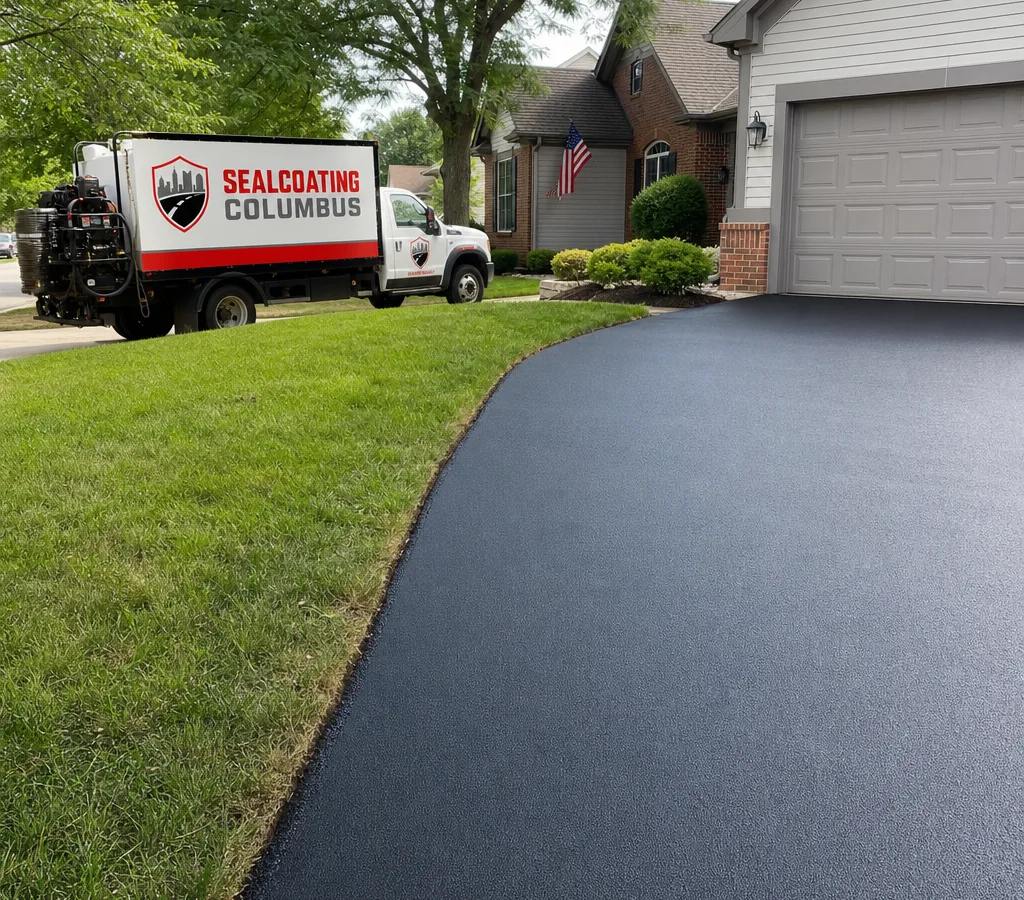
Driveway sealing in Columbus, Ohio
Protect your asphalt from water, salt, and UV with a clean, even sealcoat and clear prep, cure-time, and maintenance guidance before we start.
Surface diagnosis
If you are searching for columbus ohio driveway sealing, you are probably seeing the early signs: a gray, dry surface, small cracks that are starting to open, or raveling where the stone is showing through. Driveway sealing is not cosmetic only. A properly applied driveway seal coating slows water intrusion, reduces oxidation from sun exposure, and helps protect the surface from winter de-icers.
Columbus has real freeze-thaw cycles and plenty of wet weeks. Water finds its way into hairline cracks, then expands when it freezes. Over time that turns small cracks into larger ones, and it can start to break down the edges where driveways meet lawns and sidewalks. Regular sealing, combined with the right crack repair, is one of the simplest ways to extend the useful life of an asphalt driveway.
Sealcoating Columbus is based at 572 S Nelson Rd, Suite 5 in Columbus, and we handle driveway sealing in Columbus for homeowners who want straightforward workmanship: clean prep, correct materials for the surface, and clear expectations about when you can walk and drive on it again. You can also learn a little about how we work as a local company through Columbus sealcoating.
Preparation and application
A durable result depends on the work before the sealer ever goes down. Our residential sealcoating in Columbus typically includes:
Surface cleaning: We remove loose debris and build-up so the sealer bonds to asphalt, not dirt.
Vegetation control at edges: Grass and weeds at the perimeter can keep sealer from adhering and make edges fail early.
Crack repair where appropriate: Sealcoating is a coating, not a structural patch. We address cracks first so the sealed surface is not bridging open gaps.
Even application with clean cut lines: A consistent film thickness and neat edges help performance and appearance.
What it does not include: rebuilding failed base, correcting drainage problems, or repairing deep potholes and soft spots. If a driveway has base failure, sealing can still improve appearance, but it will not stop movement underneath. During the onsite look we will tell you plainly what sealing can and cannot accomplish for your surface.
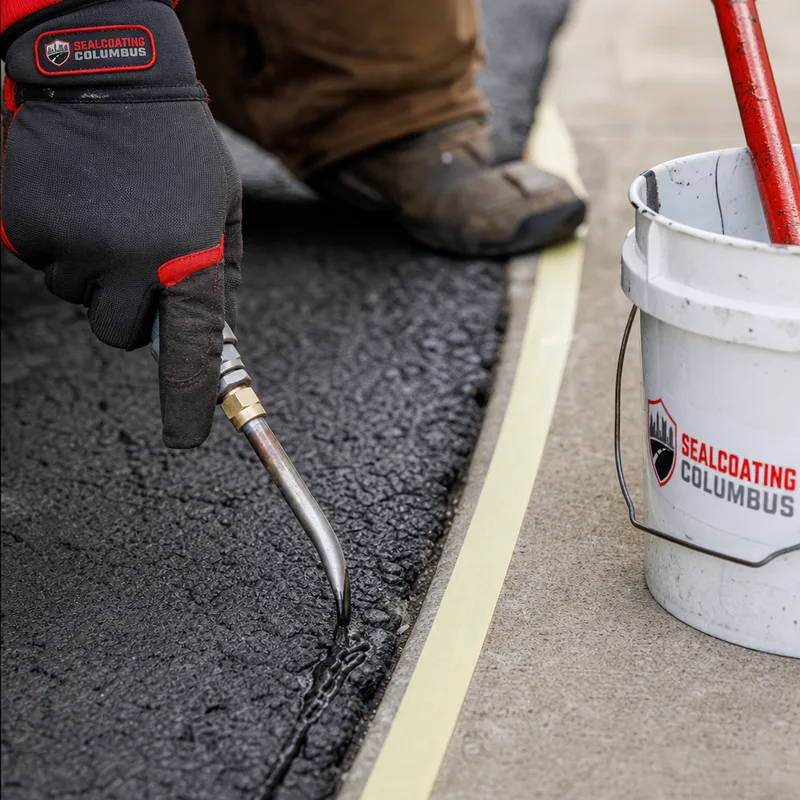
Professional surface protection
A good-looking coat over dust, moss, or oily spots does not last. We focus on cleaning and crack prep so the sealer can bond the way it should.
Asphalt driveway sealcoating works best when the coating is mixed and applied consistently, with attention to coverage and edges rather than thin, streaky passes.
Columbus humidity and shade can slow dry times. We explain when it is safe for foot traffic and when vehicles should return, based on conditions.
Edges, low spots, and crack lines are where water gets in. Good driveway sealing targets those areas during prep and application.
DIY sealing often leaves lap marks, tracked footprints, and messy transitions at sidewalks or garage aprons. We aim for a uniform finish with crisp borders.
Inspect, prepare, apply
We look at the asphalt condition, cracking pattern, and any problem areas like low spots or crumbling edges. You get a clear scope so you know what is included and what is not.
Sealer needs the right conditions. We plan for a dry window so the coating can set up properly and you are not rushed to park on it too soon.
We clear debris and address build-up that blocks adhesion. Edges are prepped so the coating is not laid over grass, soil, or loose material.
Cracks are cleaned and filled where appropriate before sealing. This step is what keeps many blacktop driveway sealing jobs from failing early along crack lines.
We apply the driveway seal coating evenly and maintain neat transitions at sidewalks and garage aprons. Before we leave, we review cure timing and simple maintenance tips.
Planning your project
Driveway sealing in Columbus typically ranges from about $250 to $650 for many residential driveways, with larger or heavily prepped surfaces sometimes running $700 to $1,200+. Smaller single-car areas tend to land at the lower end, while longer multi-car driveways with more edging and detail work price higher.
Your final price depends on square footage, crack repair needs, surface condition (oil spots, raveling, heavy oxidation), access, and whether additional prep is needed to get good adhesion. The exact cost is confirmed after an onsite look at the driveway.
Work in the field
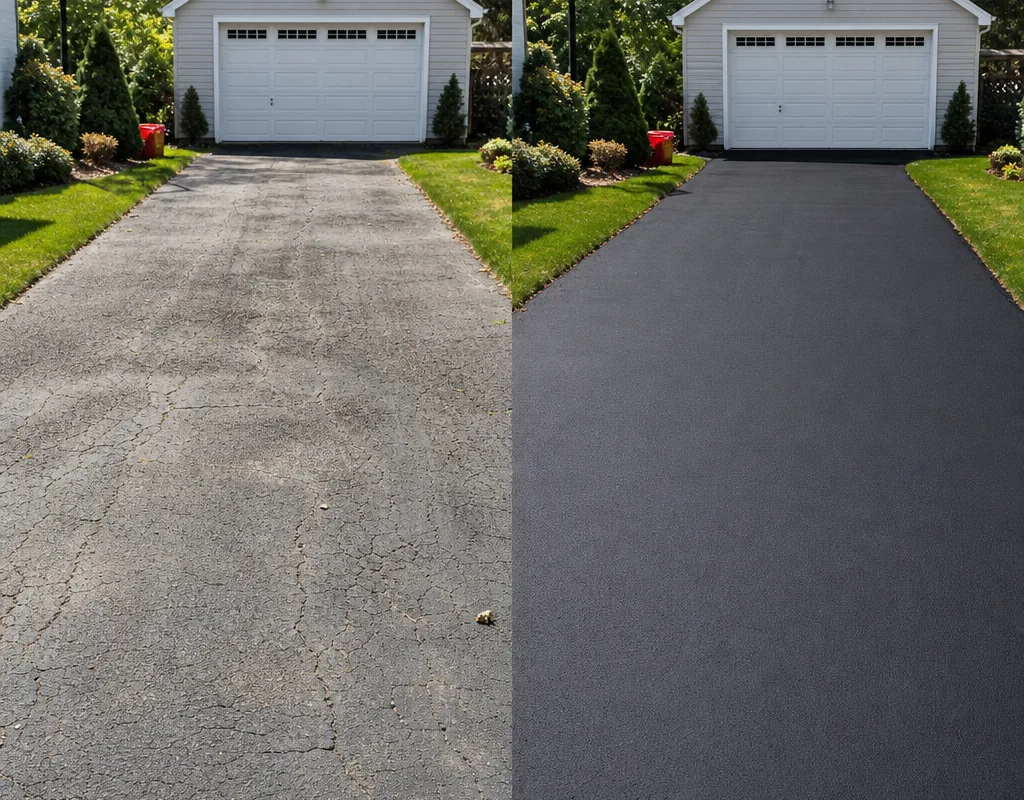
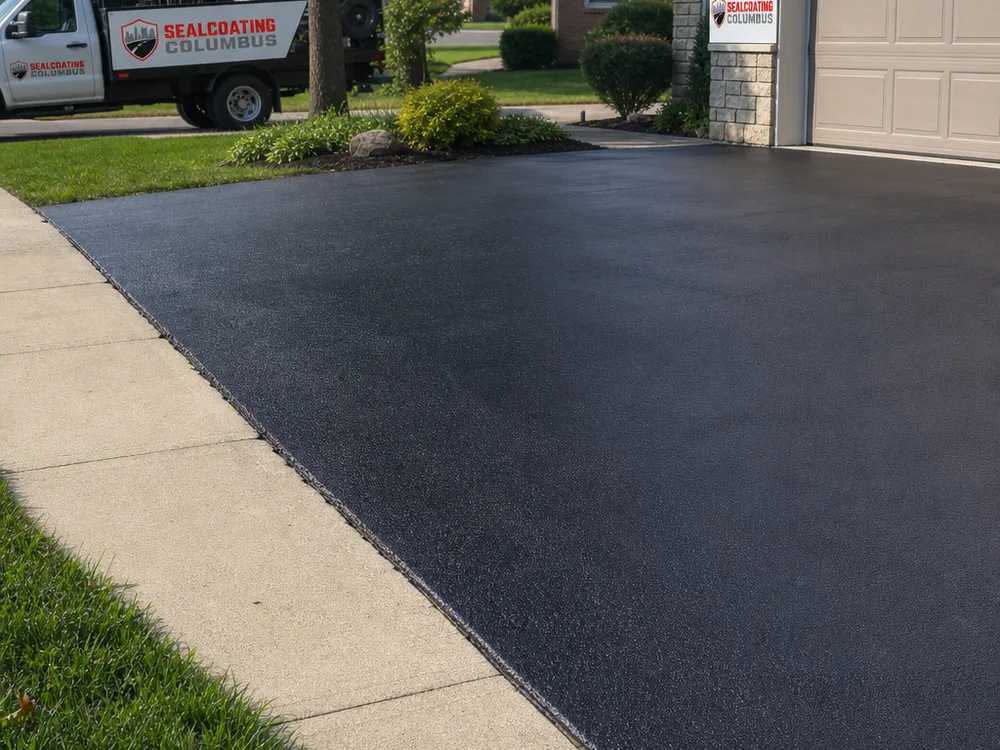
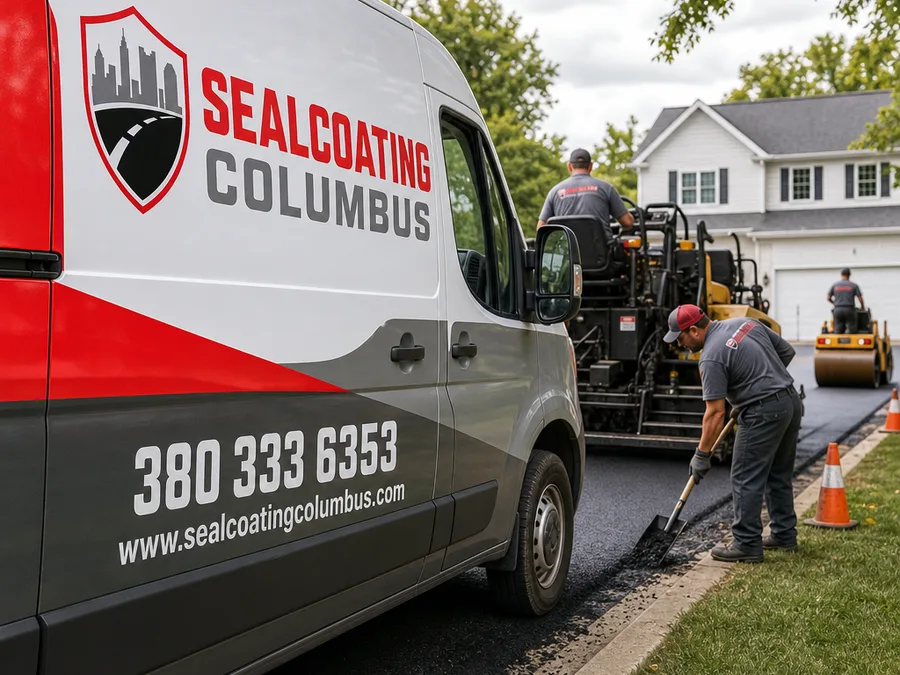
If your driveway is fading, cracking, or absorbing water instead of shedding it, get a straightforward evaluation and a written scope so you can decide whether sealing now makes sense for the surface you have.
Book Your Free InspectionBefore you schedule
Most sealed driveways need at least a full day before vehicle traffic, and longer if conditions are cool, humid, or shaded. In Columbus, tree cover and humid summer days can slow cure time, so we will give you a practical return-to-parking window based on the forecast and your driveway's exposure.
Moderate temperatures with a dry window are usually best, which is why many homeowners schedule in spring or fall, but summer can work well when the forecast cooperates. What matters most is a dry surface and enough time for the coating to cure before rain, heavy dew, or early parking.
Yes, crack repair is addressed before sealing when it is appropriate for the crack type and size. Sealer alone will not bridge open cracks for long, so prepping and filling them first is often the difference between a driveway that stays neat and one that shows crack lines quickly.
Many homeowners reseal every 2 to 3 years, but the right timing depends on sun exposure, traffic, and how quickly the surface oxidizes and dries out. If water is soaking in instead of beading, or the asphalt has turned light gray and feels rough, it is usually time to consider resealing.
Sometimes, but it depends on whether the asphalt is still intact enough to hold a coating. If the surface is heavily raveled or the base is failing, sealing can improve appearance but will not rebuild strength; during the onsite check we will tell you whether sealing is a good use of money or whether repairs should come first.
A properly applied coat on textured asphalt is not typically slick once cured, but any smooth surface can be more slippery when wet or icy. We focus on correct coverage and curing so the finish is even and stable, and we will flag any areas where smoothness or slope could be a concern.
Move vehicles, keep pets and kids away from the work area, and plan for a no-parking window so the coating can cure. If you have portable basketball hoops or items stored along the driveway edge, relocating them ahead of time helps us keep clean cut lines and avoid missed spots.
Start with an on-site inspection
Tell us what you are seeing on the asphalt and when you need the driveway available. We will recommend the right prep and sealing approach and confirm timing so the finish cures the way it should.