
Less water into the base
A sealed surface sheds water rather than letting it soak through to the aggregate below, which is the layer that keeps a long driveway from flexing and cracking.
Serving Columbus, Ohio & surrounding areas
Mon–Fri 8am–6pm · Sat 9am–2pm
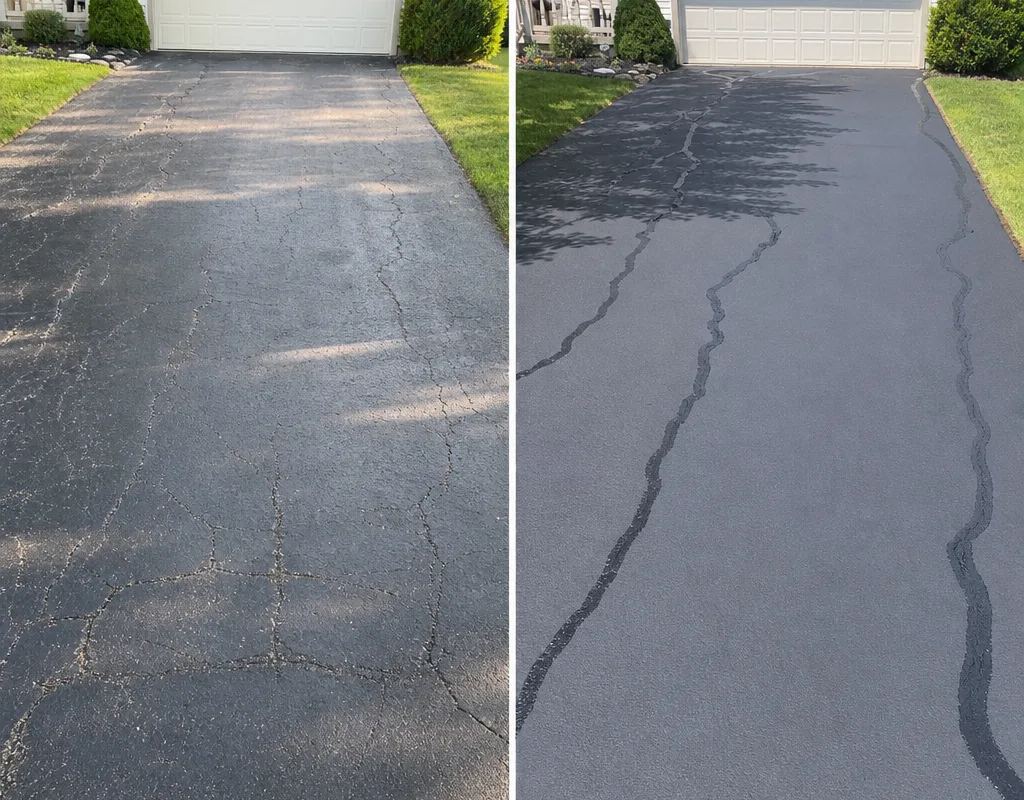
Sealcoating in Delaware, Ohio
Asphalt sealing for the longer driveways common around Delaware, with edges stabilized before coating and a written plan for how the surface cures and when it reopens.
Pavement condition
A good number of driveways around Delaware are long, and many have no curb or hard border holding the asphalt in. Without that confinement the outer six inches of pavement carry less support than the center, so they ravel and crumble first. Sealing a surface like that is worth doing, but the edge has to be dealt with honestly before any material goes down.
On the walkthrough we look at the full run rather than the section nearest the garage. Low spots that hold water after rain, soft shoulders where a tire has dropped off the edge, and the point where asphalt meets gravel or grass all tell us whether the surface is ready. Where an edge is already breaking apart, coating it only hides the condition for a season.
We are based at 572 S Nelson Rd, Suite 5 in Columbus and cover Delaware from that address. It is a longer run north for us, which affects scheduling rather than the work: jobs here are planned as a single visit with the materials and time for the whole length, not split across days.
The sequence on site
Length changes the logistics more than the method. The surface still has to be clean, dry, and structurally sound before it is worth protecting.
What it does not include: rebuilding failed base, correcting drainage problems, or repairing deep potholes and soft spots. If a driveway has base failure, sealing can still improve appearance, but it will not stop movement underneath. During the onsite look we will tell you plainly what sealing can and cannot accomplish for your surface.
What it protects against
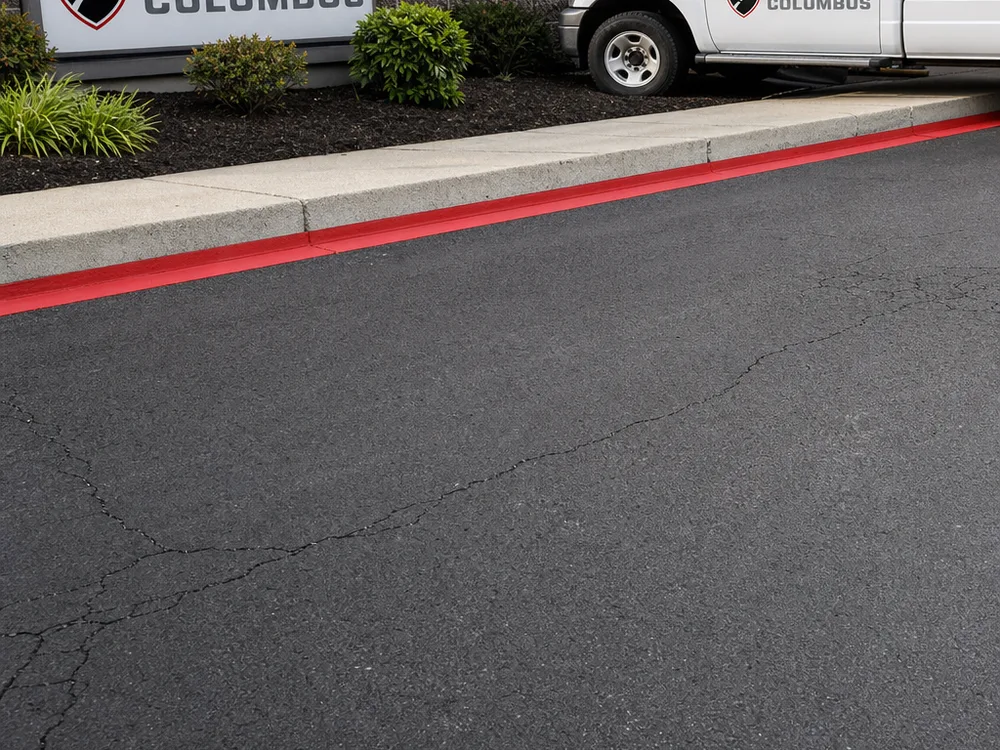
Out here the damage usually starts at the perimeter and at the base, not in the middle of the slab, which shapes what the work is actually defending.
A sealed surface sheds water rather than letting it soak through to the aggregate below, which is the layer that keeps a long driveway from flexing and cracking.
Clearing and cutting in the edges gives the asphalt a visible boundary again, instead of a gradual fade into gravel, soil, or lawn.
Sun exposure dries the binder and leaves the surface gray and loose. Coating slows that across the whole length, including the stretch nobody looks at.
Where an edge or low spot needs patching, we say so and quote it separately, rather than sealing over a section that will fail again by spring.
The length is planned for up front, so the driveway is prepped, coated, and curing on the same day rather than left half finished.
Planning the project
Residential sealcoating in the Columbus area typically runs about $250 to $650, with larger multi-car driveways often around $650 to $1,200+. Long driveways frequently sit at or above the top of that band simply because of area, so measurement matters more here than on a standard two-car drive.
Crack volume is the other variable worth knowing about early. A long surface with open joints needs filling before coating, and that is quoted on its own. Final cost depends on surface area, pavement condition, crack volume, oil spot treatment, access, and hand edging, confirmed after an on-site measurement.
Work in the field
These photographs show crack work and finished surfaces from Columbus-area jobs, which is the same preparation sequence a longer Delaware driveway gets.
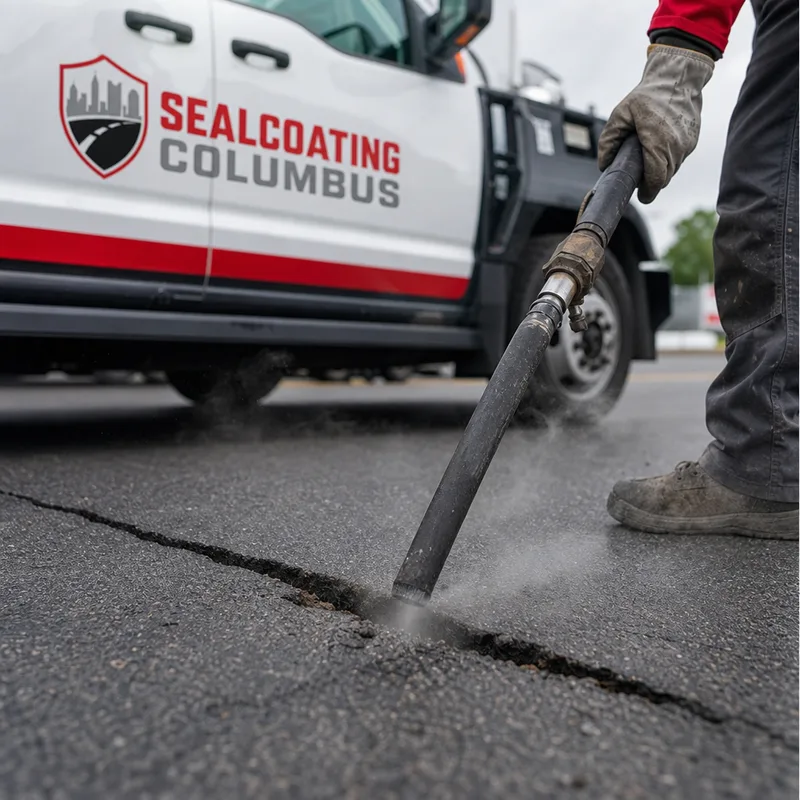
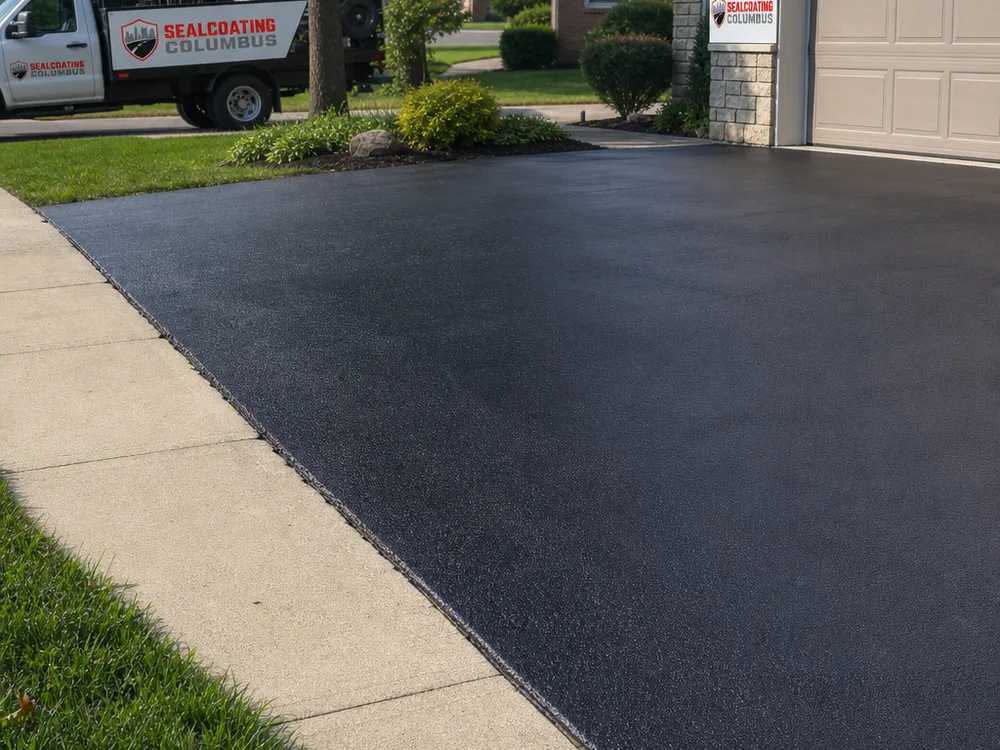
A full-length walkthrough separates the parts of the surface that are ready to seal from the parts that need repair, so the money goes where it changes the outcome.
Book Your Free InspectionBefore you book
Length and open edges raise their own questions, and these are the ones that come up on almost every estimate up here.
Rarely. Edge loss is usually a confinement problem rather than a failure of the whole surface. Often the edge can be patched or built back and the rest of the driveway sealed normally. Replacement only enters the conversation when the base has failed across large sections.
Yes, and we clear that transition first so there is a real edge to work to. What we will not do is coat loose material at the boundary, because sealer needs sound pavement underneath to bond to.
The quote is based on the surface: area, condition, crack volume, and prep. Distance affects how we schedule the day, not the measurement we price from.
That is how we plan it. The length is measured beforehand so the right volume of material and enough working time are allocated, and the whole surface is coated in the same visit so it cures as one.
Sealer will not level a surface, so a low spot stays a low spot. We will point them out and explain whether they are cosmetic or a drainage issue worth addressing, then seal the surface knowing water will still gather there.
At least a full day for most surfaces, longer when it is cool, humid, or shaded. On a long driveway we will tell you whether the near end can take traffic before the far end, so you are not stuck without access.
Start with an on-site review
Let us know roughly how long the driveway is and what the edges look like now. We will walk the full surface, flag what should be repaired before coating, and confirm the schedule and cure window.
Request a quote
Send the details and we will arrange an on-site look, then put a written scope and price together.