
A clear repair-or-seal answer
You find out before committing whether the surface is ready to coat, needs work first, or is far enough gone that sealing is not the right spend.
Serving Columbus, Ohio & surrounding areas
Mon–Fri 8am–6pm · Sat 9am–2pm
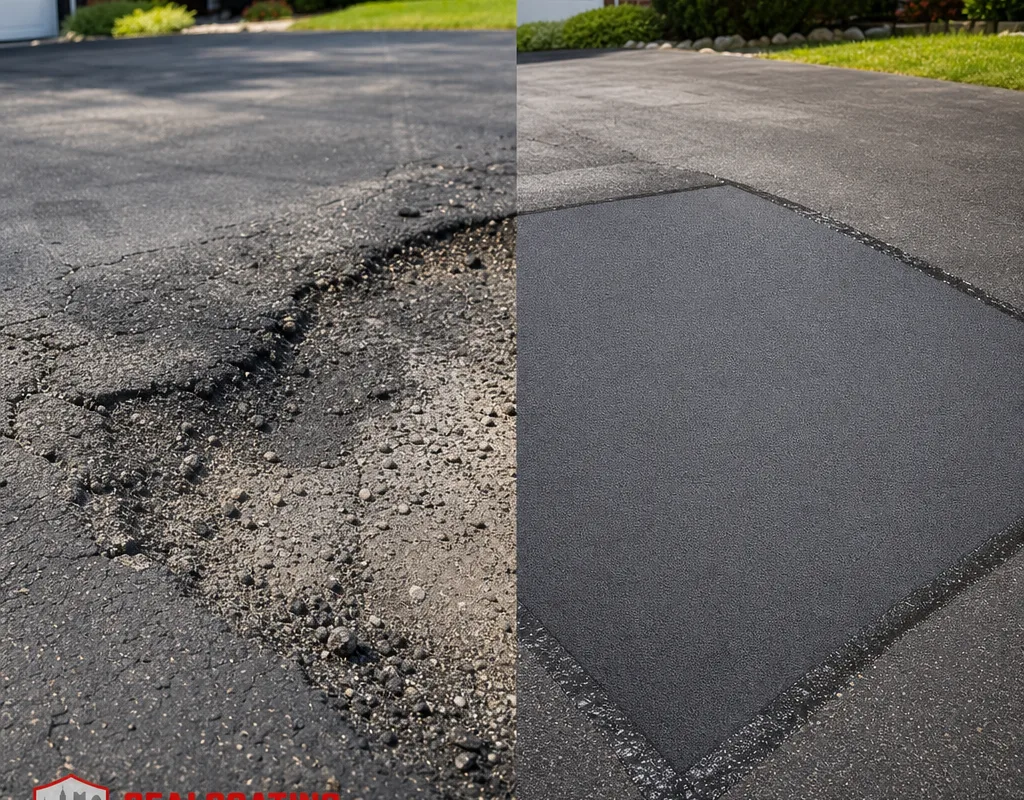
Sealcoating in Grove City, Ohio
Seal coating for Grove City driveways and small lots, starting with a plain assessment of what should be repaired first so you are not paying to coat a surface that needs more than sealer.
Condition first
A seal coat protects sound asphalt. It does not bridge a failing patch, fill a pothole, or hold together an area that has gone to alligator cracking. Plenty of the driveways we look at in Grove City are somewhere in between: mostly solid, with two or three spots that should be handled before anything is applied over them.
So the first part of the job is sorting the surface into categories. Tight surface cracking can be sealed over and benefits from it. Open joints need filling. A soft or broken section needs cutting out and patching, and that is a repair line rather than part of the sealing. We will tell you which is which and what each one changes.
Sealcoating Columbus operates from 572 S Nelson Rd, Suite 5 in Columbus and covers Grove City from there. The point of the walkthrough is that you can decide with real information: seal now, repair and then seal, or wait. We would rather quote the sequence correctly than coat something that will look wrong within a year.
The order of work
Doing these in sequence is what separates a protective coating from a cosmetic one, and the order is not negotiable on a surface with existing damage.
What it does not include: rebuilding failed base, correcting drainage problems, or repairing deep potholes and soft spots. If a driveway has base failure, sealing can still improve appearance, but it will not stop movement underneath. During the onsite look we will tell you plainly what sealing can and cannot accomplish for your surface.
What you get out of it
When the repairs come first, the seal coat does the job it is meant to do instead of masking a problem for a few months.
You find out before committing whether the surface is ready to coat, needs work first, or is far enough gone that sealing is not the right spend.
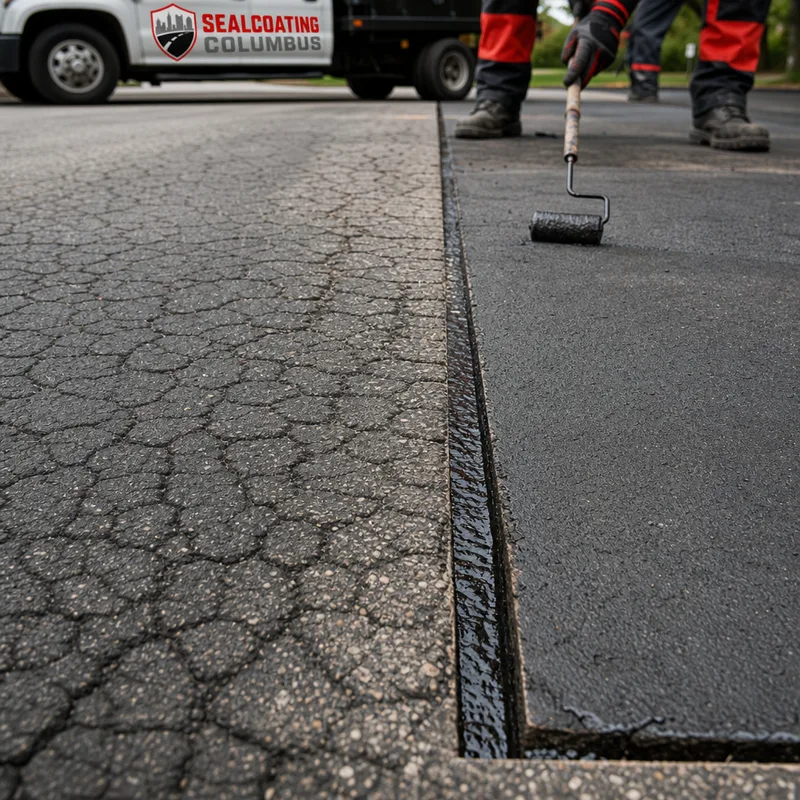
Open joints are filled rather than coated over, so the sealer is protecting a surface that is already resisting water instead of bridging a gap.
Failed sections are cut out and compacted, giving the finished surface a consistent base rather than a soft spot under fresh coating.
Concrete, curbs, and garage doors are masked before application, so the finished edge is a line you would have drawn on purpose.
Repair work and sealing are quoted separately, so you can see what each part costs and decide how much to do now.
Planning the project
Sealcoating typically runs about $250 to $650 for many residential driveways in the Columbus area, with larger multi-car driveways often around $650 to $1,200+. Asphalt repair is priced on its own and commonly starts around $250 for a small patch, with larger repair scopes running to $1,500+ depending on area and depth.
Because this page is about sequence, it is worth being clear that those are two separate numbers. The walkthrough tells you whether you need both, and the exact figures are confirmed after an on-site measurement of the surface and the areas needing work.
Repair and finish
These photographs show the repair work that precedes coating and the finish that follows it, which is the sequence a Grove City driveway with existing damage would follow.
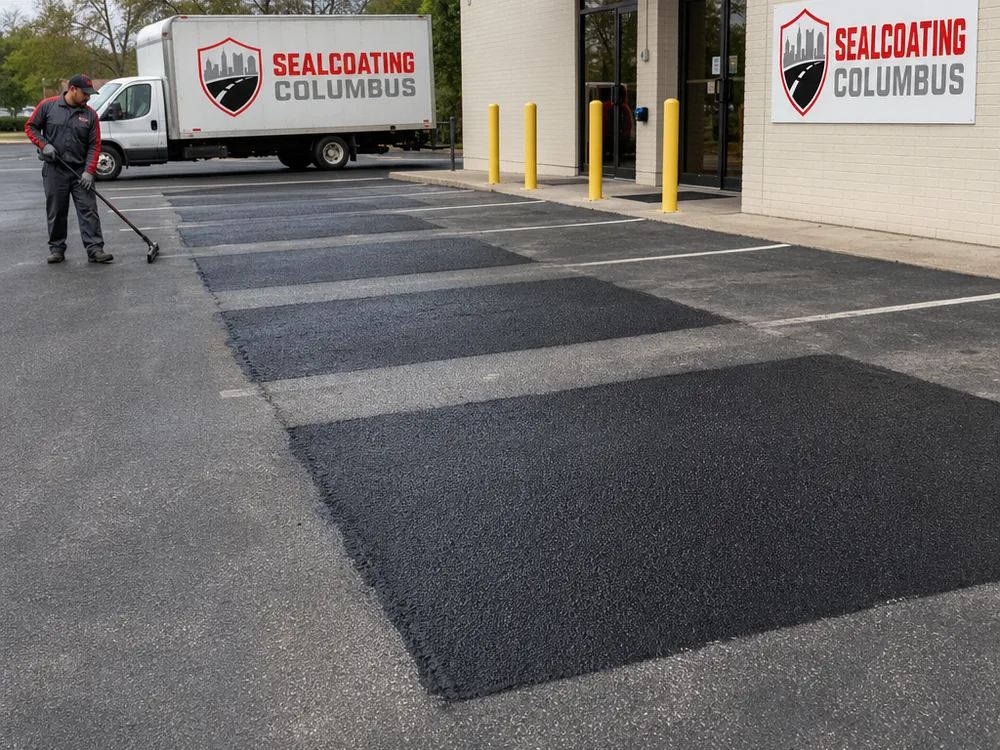
An on-site review puts the surface into categories: what gets sealed now, what gets filled or patched first, and what can wait another season without getting worse.
Book Your Free InspectionBefore you book
These answers deal with the decision most owners here are actually weighing, which is how much work to do before coating.
Tight hairline cracking, yes, and sealing slows it down. Open or working joints need filling first, because sealer is a coating and not a filler. Coating over an open crack leaves it open under a thin film that splits again at the same line.
The usual signs are a soft feel underfoot, interconnected cracking in a web pattern, or material that moves when you push at it. Those indicate the base is compromised, and a patch addresses it while coating does not.
Often yes, if the surface is still structurally sound. If large areas have failed, we will say so and explain what sealing would and would not accomplish, so you can decide whether to spend on protection or plan for resurfacing.
Sometimes, depending on the repair. Crack filling is usually same-visit. A patch may need time to set before coating, and we will tell you up front which schedule applies so you are not surprised.
A fresh patch is a different age and texture than the surrounding asphalt, so it may read slightly differently even after coating. Sealing afterward narrows the difference considerably, but it does not make a patch invisible.
That is a reasonable choice. Repairs address the damage that spreads, and sealing can follow later. We will quote them separately so the decision is yours rather than bundled.
Start with an on-site review
Tell us what you are seeing: cracking, soft spots, potholes, or just a dry gray surface. We will walk it, separate repair from sealing, and give you a written scope with each part priced on its own.
Request a quote
Send the details and we will arrange an on-site look, then put a written scope and price together.