
Water shed instead of absorbed
A sealed surface moves water off rather than letting it soak in, which matters most where shade keeps the pavement damp for longer after rain.
Serving Columbus, Ohio & surrounding areas
Mon–Fri 8am–6pm · Sat 9am–2pm
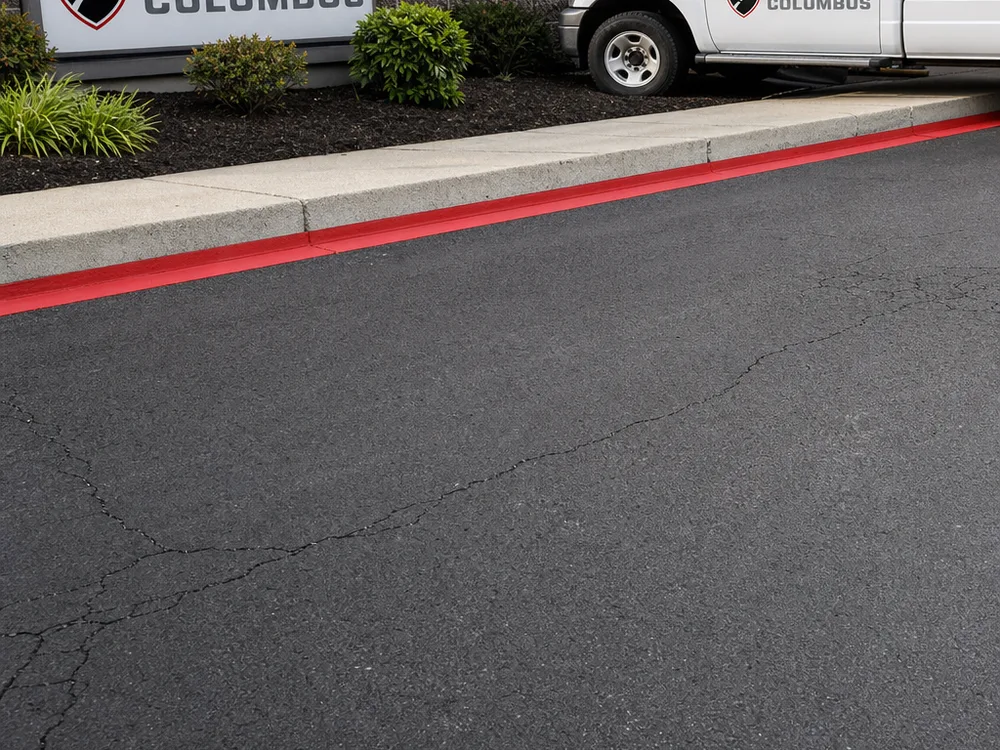
Sealcoating in Westerville, Ohio
Driveway sealing for Westerville's shaded, tree-lined streets, with organic debris properly cleared before application and cure timing set for a surface that does not get full sun.
Surface and exposure
Westerville has a lot of mature tree cover, and that changes two practical things about sealcoating. Surfaces under canopy collect leaf litter, seed drop, and in damp corners a film of moss or algae, none of which sealer will bond through. And a shaded driveway holds moisture longer and dries more slowly than one in open sun.
Both are manageable, but they have to be planned for rather than discovered on the day. We clear organic material off the full surface and check that the asphalt is genuinely dry before anything is applied, particularly along the shaded edge where water lingers after the rest has dried.
Cure time is the part worth being honest about. The same product that reopens to traffic in a day on an exposed driveway can need noticeably longer under heavy canopy in humid weather. Sealcoating Columbus works from 572 S Nelson Rd, Suite 5 in Columbus, and on a Westerville job we set the return-to-parking window from the actual exposure rather than quoting a standard figure.
Working a shaded surface
The method is the same as anywhere else. What changes is how much attention goes into cleaning and how the timing is set.
What it does not include: rebuilding failed base, correcting drainage problems, or repairing deep potholes and soft spots. If a driveway has base failure, sealing can still improve appearance, but it will not stop movement underneath. During the onsite look we will tell you plainly what sealing can and cannot accomplish for your surface.
What it protects
Shade reduces UV damage but raises moisture exposure, so the wear pattern here differs from a driveway baking in open sun.
A sealed surface moves water off rather than letting it soak in, which matters most where shade keeps the pavement damp for longer after rain.
Coated asphalt gives organic debris less to grip, so seasonal leaf drop and seed litter sweep off more easily than they do from a dry, porous surface.
Clearing the growth and debris before application is what lets the sealer adhere to the asphalt, which is the difference between a coating that wears and one that lifts.
You get a cure window that accounts for the shade on your property, so vehicles return when the surface is ready rather than when a chart says so.
Walks, aprons, and curbs are masked beforehand, keeping the finished edge clean against the surrounding hardscape.
Planning the project
Residential sealcoating around Columbus typically runs about $250 to $650, and larger multi-car driveways often land around $650 to $1,200+. Shade does not change the price by itself, but surfaces with heavy organic buildup can need more cleaning time, and that is reflected in the scope.
Final cost depends on surface area, pavement condition, crack volume, oil spot treatment, access, and the hand edging required around concrete and landscaping. The figure is confirmed after an on-site walkthrough and measurement.
Work in the field
These photographs from Columbus-area driveways show the cleaned, prepared state a surface reaches before coating and how the finished edges look afterward.
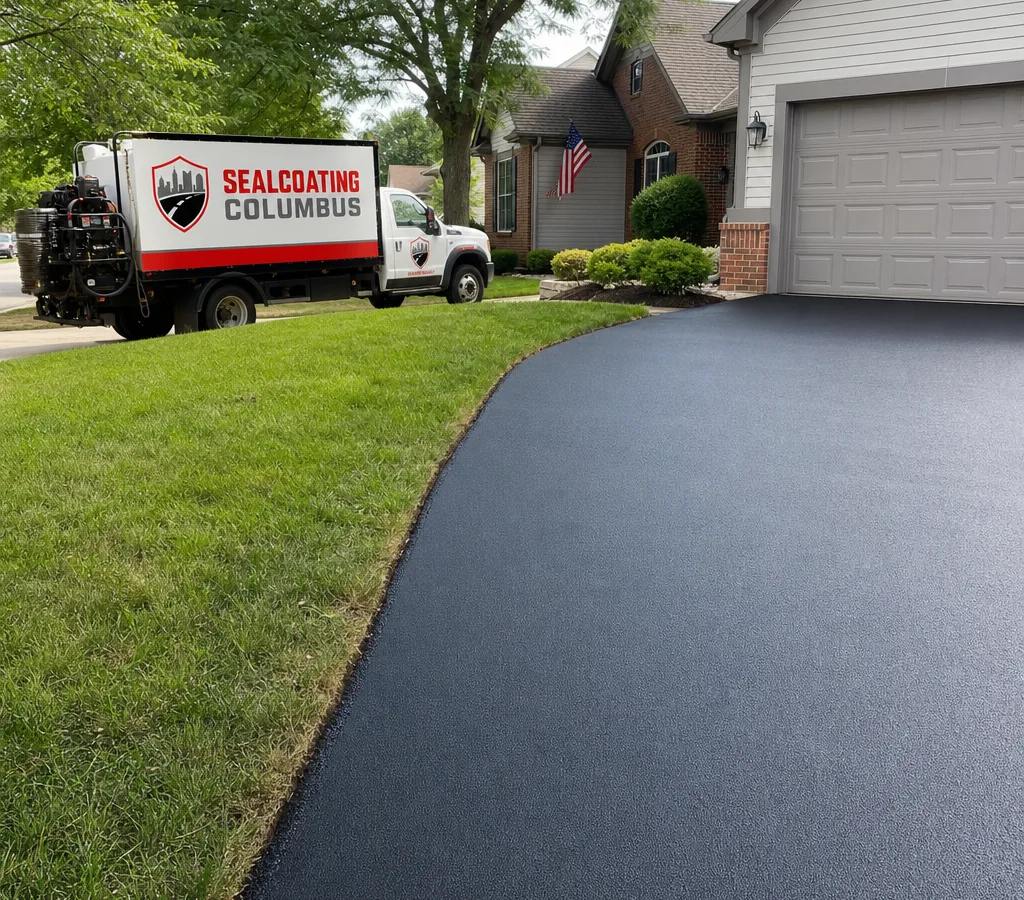
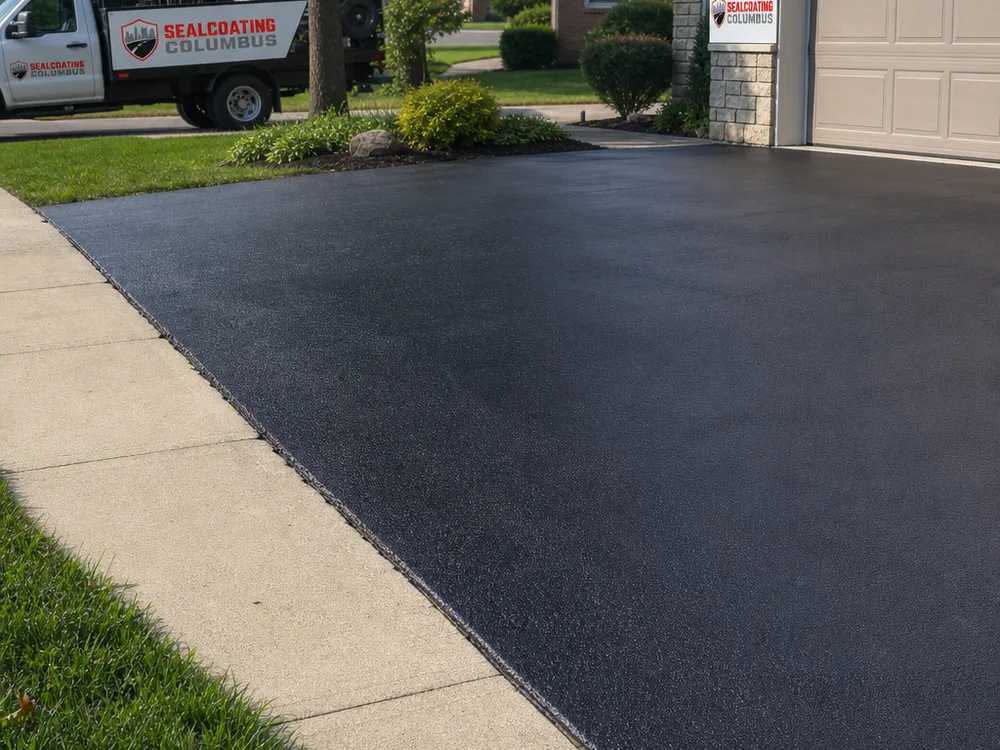
If your driveway sits under canopy, the honest answer about timing depends on the shade, the humidity, and the week we apply it. An on-site look is how we set that properly.
Book Your Free InspectionBefore you book
Tree cover prompts most of the questions here, and timing is usually the one owners need answered before they can schedule.
Plan on more than the usual full day. Shade and humidity both slow the set, so a canopy-covered surface can need an extra stretch before vehicle traffic. We will give you a specific window after seeing the exposure and checking the forecast.
It has to come off first. Sealer will not bond to moss or algae, so coating over it produces a film that lifts. We treat and clear those areas as part of prep rather than working around them.
Debris landing on a surface that has not set can leave marks. We plan application for a window that avoids the worst of it where possible, and we will tell you if seasonal drop on your property means waiting is the better call.
Less UV damage, yes, but more moisture exposure. Shaded driveways tend to hold water and grow organic film instead of drying and oxidizing. It is a different wear pattern rather than a lighter one.
No. The surface needs a dry window through the initial set, and that is stricter under shade because the pavement is already slower to dry. We reschedule rather than apply into marginal conditions.
The whole surface being coated gets cleared, edges included. Debris left at the perimeter is exactly where a coating starts to fail, so it is not a place to save time.
Start with an on-site review
Tell us how much shade the driveway gets and what the surface looks like now. We will confirm the cleaning the asphalt needs, set a cure window that matches the exposure, and schedule around a dry stretch.
Request a quote
Send the details and we will arrange an on-site look, then put a written scope and price together.